Sunday, December 11, 2011

Inspired Post #3: Why is it So Difficult to Care?


In completing our final policy brief, our team talked a lot about implementation and motivating citizens to change. These discussion were obviously regarding natural gas but can certainly be applied to a vast array of other situations. However, one issue we kept stumbling on was whether or not the incentives and gains from a policy recommendation would actually incited people to change. It may seem like a simple question and answer but I’m not so sure.

We have all seen a push for cleaner energy and the green revolution in the U.S. over recent years. Although we all know the costs and benefits, so few people regularly take advantage of incentives and actions that can carry out more environmentally friendly objectives from a policy but also an overall life perspective. This leads me to my question, why is it so difficult for individuals to care?

I think it all comes down to human beings being creature of habit and averse to change. Although the environmental example may be oversimplified and overused, I think there is still a valuable observation to be made here. You and I both know that we should bring a reusable bag to the grocery store or walk to class instead of taking the bus but how often do you chose the latter option rather than the former? For me, the answer is more than I know I should.

So to bring this back to a policy relevance, this observation coupled with the knowledge I gained in this class have really given me a new appreciation for the job of a U.S. policy maker. Although you spend hours and hours working, consulting, theorizing, testing, supporting, and finally deciding on a single policy plan and implementation, who’s to say your constituents will even appreciate or capitalize on your hard work? I realize the payoff is certainly great in terms of the overall good of our country, but I feel that too few people realize how difficult a task this really is. I know if I had not taken this course, I would certainly still be ignorant of it as well.


Inspired Post #2: The Next Frontier - Cybersecurity & Social Media

After talking with Jim Lewis at CSIS, I began thinking about what was next for cybersecurity. We already have so many threats and issues we are attempting to tackle, but the nature of this entity is ever-changing. Therefore, I wonder what the next frontier of threats will bring. Since we have been talking about social media and the changing role this had played on so many different areas of technology, some incorporation of the two seems like a logical next step. In doing some research, not everyone agrees that this threat is the most dangerous or imminent but there seems to be a consensus that this issue is only on the rise. 

It may seem like a simple threat, just personal information and friend lists, but with the increase of social media for professional purposes and specialized trends tracking this could become a serious threat. If you’ve ever talked to someone who has had their identity or financial information compromised or completely stolen, they most often will tell you it is a nightmare to recover from. In addition to compromised information, threats also come in the form of dissemination of misinformation. Although typically only occurring on smaller scales, this could pose significant threats to individuals, companies, and government entities if used incorrectly. Finally, as we have seen in our discussion regarding Iran and China, third party tracking of information in the cyber realm can lead to very real consequences for individuals. Morozov touched on this a bit in his book as did our Iran twitter presenter, but it is all too easy to acknowledge and dismiss from our cozy seats here in the U.S. However, for many individuals in the rest of the world this is a daily threat they face if they want to use social media to speak out.

Although not the most drastic threat individuals face in terms of cybersecurity, I think there are a few important lessons we can gain from this new frontier. Most importantly, it highlights the critical need for regulation and caution with the changing face of technology, the internet, and social media. Despite its structured format, I think this video really serves to highlight just what type of a threat we’re facing when it comes to social media and cybersecurity today.

Inspired Post #1: The World of Public Policy - An Engineer’s Perspective


Please don’t laugh at the ignorance of the proceeding statement, but the world of policy making and think tanks is much more complicated than I thought before taking this class. From the depth of the research necessary to back a policy decision, to the collaboration needed to determine an idea, and finally to the depth of background and experience needed to recommend a balanced and well-rounded policy solution, this career and world entails a good deal. Completing the policy brief in particular was very enlightening as the amount of work necessary to even begin to understand and/or change an existing policy. 

This whole idea is a very foreign concept to me. As an engineer, we have our equations and we have our solutions. There is a great deal of idea generation but any creativity always has these two tenets at its core. As I have come to understand, this is certainly not the case when it comes to creating and persuading the acceptance of new policy. The complexity of ideas and information needed to even start the implementation section of our final policy brief well-amounted to more than I have ever spent on an engineering project.  It is certainly a different world.


However, I think it has been very beneficial to have the rug ripped out from under me and get my hair a bit frazzled. This world of think tanks, as I perceive it, revolves around the convergence of so many different topics, subtopics, specialties, and connections that it really has helped broaden my view back out from the sort of tunnel vision towards equations and formulas that I have been accustomed to in undergrad. It makes me stop are really think about how everything is so inexplicable interconnected and how much of an education I need beyond fluid mechanics and thermodynamics. 


Although it has been a new and very difficult spin on my academic experiences here at Penn State, I think it is perhaps, and I say this with complete sincerity, one of the most impactful classes of my undergraduate career. From the influential individuals we spoke with, to the range and relevance of topics we covered, finally the experience of the final presentation, it has certainly taught me a lot about my country and myself. I don’t think politics and policy making is really for me but at least now I know the importance of being well-informed and the depth of work and knowledge needed to keep this country on its feet.

Assigned Blog #9: CSIS Trip - Let Them Eat and Make Policy


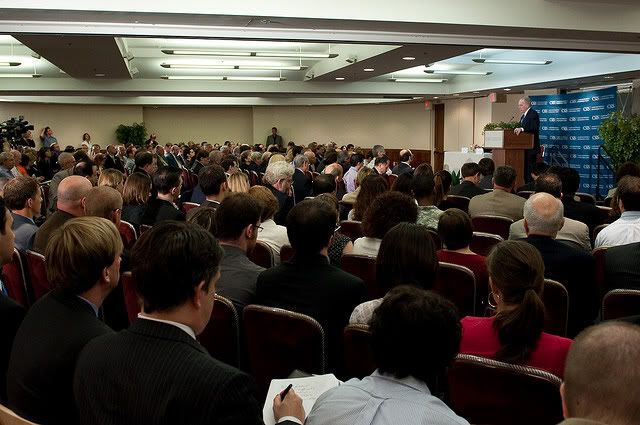
In our recent trip to CSIS, Dr. Tapia informed us the amazingly delicious dinner we had at 1789 was not only a perk of our visit and relationship with the think tank but also an important insight into a key component of an actual policymaker’s life. Although, I think from classes and past studies we all seem to be familiar with this idea it wasn’t until we actually experienced it that a fully grasped the concept.

In talking more with people from the trip and friends that work in DC, I am really struck by just how much business goes on over the dinner table or at the bar counter. It’s no wonder why DC has such a lively and well-developed restaurant and night-life scene; this is where a lot of the policy making and business deals happen. I think a big component is the slackened formality we experienced at the business dinner. Although it was still the same people as the day for the most part and despite many discussion relating to school or work, it had a much more relaxed air. To take it to a more psychological pondering, it could also be tied back to the integral role food plays in bring people together in our home lives and upbringings. Either way it is certainly an interesting component of business and policy making that I think goes gross overlooked and undervalued in an academic sense.

I know the School of Hotel & Restaurant Institution Management and possibly the School of Business teaches about the key role business dinners play and more importantly, proper business etiquette, but what about the other schools? I think this should be a key component of every college here at Penn State. Although it mainly applies to the two colleges mentioned, it would certainly be a valuable life skill to any undergrad student. 

Perhaps it is my ignorance and naiveté yet again that is creating the intrigue and novelty at this experience but I think it certainly added a great deal to my understanding and study of the world of think tank and policy. Were you all as struck by me and the role this played in policy life? Also, do your respective colleges and majors teach you about these things? Perhaps it is yet again the tunnel vision of the College of Engineering rearing its ugly head but I’d been interested it so if this is true across the university or even across the country.

Assigned Blog #8: 21st Century Statecraft & Citizen Diplomacy

Can digital diplomacy on a personal level really have effect on the world? In Secretary of State Hillary Clinton’s initial proposal the for 21st Century Statecraft initiative, she pushes for individuals to be personal ambassadors who can use experiences and networks to help problems on a global scale. However, I cannot help but wonder how much effect efforts on the individual level like this could really have on diplomacy overall?


In examining this idea further, I discovered this was not a new idea presented in the 21st Century initiative. There have been organizations, most notably the U.S. Center for Citizen Diplomacy (CCP), and initiative that have been around here in the U.S. for quite sometime. In looking into the efficacy of this type of diplomacy, I found many cases and examples of shaping positive foreign relations on an individual basis but could not find much empirical data on how much this can positively affect foreign policies of nations as a whole.
Additionally, when coupled with social media and generating digital citizen diplomacy, I am even more skeptical about the efficacy of these efforts. While I agree that this can produce exposure and spread of positive information with regard to foreign policy, I don’t think quantity ensures quality in this case. While the multitude of tools and technologies available presents great opportunities, I cannot help but be skeptical about their practical utility. Can a few tweets and texts really take the place of government instituted programs and initiatives on the ground around the world?

The CCP recently published a report outlining ten recommendations for improving citizen diplomacy in the digital age. As an opponent of social media, am I simply being too critical of the possibilities with regard to this new technology? Or do you agree with me that, although admirable in ideals, this type of diplomacy will prove insignificant in the face of traditional diplomatic relations and protocols?

Assigned Blog #7: China - Rarity is Power

Does China hold the lifeblood of our life here in America? Well, if you agree with the statement that technology is integral to life as we know it here in the Western world, then the answer is yes. Our recent speaker touched on several of the unusual or intangible resources of power that several countries around the world hold. For China, she stated their stock of rare earth elements gives them enormous power in this technical world. So as of now, they do indeed hold the key to crucial parts of our economy; unfortunately for us, they are aware of this might and are not afraid to use it.


This interesting video depicts the extent to which our society. (Sorry, I could not embed it.)


A recent article in Daily Tech illustrated just how striking this reliance is. Although China only contains about 30% of the world’s reserves in these precious minerals, they have maneuvered themselves to controlling 97% of the market. Additionally alarming is the hold China’s largest exporter has announced on shipments of these elements to such countries as the U.S., Japan, and Europe for one month in “an attempt to artificially inflate prices” and give them the foothold they need to try and reign in the profits the U.S. and Japan primarily gain from using these elements for the local production of magnets. 

Clearly China is using this unconventional source of power to the best of their ability. Although I understood the idea of what our presenter was stating, looking deeper into the extent of this might really astounded me. When coupled with the enormous trade surplus China is currently sitting on despite deficits in much of the Western world, this additional source of power and non-monetary wealth should certainly give policy makers considerable fear.

Assigned Blog #5: